
Monsoon Skin Care: Spa Treatments for Humidity-Damaged Skin in Coastal Karnataka
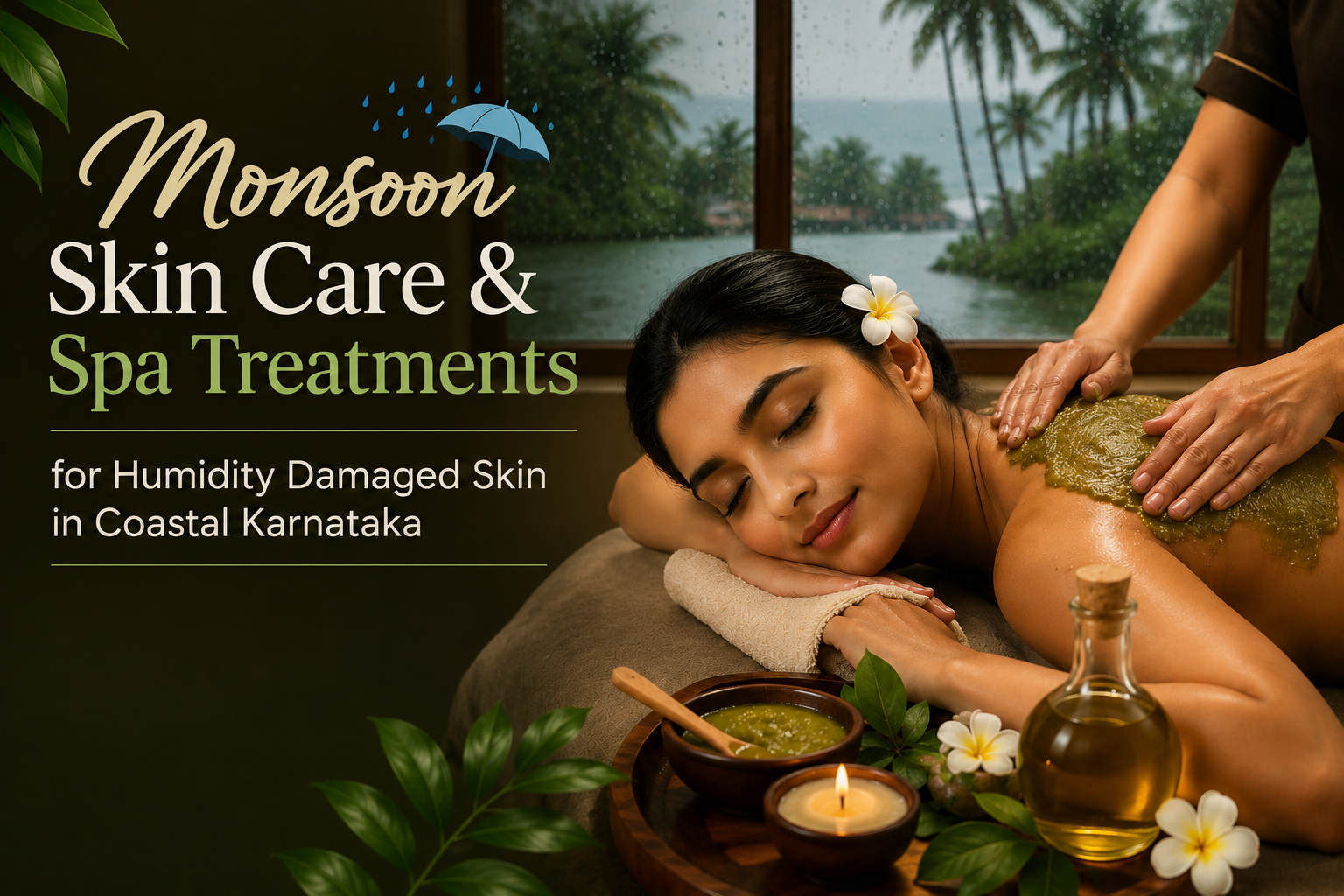
The first monsoon downpour over Mangalore feels like a gift after months of coastal heat. Streets cool down, the air smells like wet earth, and everyone breathes a little easier. Your skin, though, rarely gets the memo. While the temperature drops, humidity along the Dakshina Kannada coast regularly climbs above 85 – 90% during the rainy months, and that combination of warmth and moisture is exactly what turns skin oily, congested, and irritated within weeks of the first showers.
Coastal Karnataka isn’t dealing with an ordinary monsoon. The region receives some of the heaviest rainfall in the state, and Mangalore’s relative humidity stays elevated for nearly six months of the year, peaking in July when it hovers close to 90%. That level of moisture in the air changes how skin behaves at a basic level – sweat stops evaporating properly, oil glands overcompensate, and the skin barrier struggles to stay balanced. Dermatologists across India report a noticeable jump in skin-related consultations during the rainy season, with fungal infections, breakouts, and persistent oiliness topping the list of complaints. For anyone living along the coast, this isn’t a seasonal inconvenience – it’s a recurring skin health challenge that deserves a proper routine, not just a change of face wash.
Why Coastal Humidity Is Harder on Skin Than Inland Weather
Skin in a coastal city works differently from skin in a drier climate. When humidity is high, sweat lingers on the surface instead of evaporating, mixing with natural oils, sunscreen, and everyday pollutants to form a film that clogs pores. This is why so many people in Mangalore and Udupi notice more blackheads and closed comedones during the rains, even if their skin stays relatively clear the rest of the year. The salty sea breeze adds another layer of stress, drawing moisture out of the skin even as the surrounding air feels saturated with it — a strange paradox where skin can be simultaneously oily and dehydrated.
Feet, underarms, and skin folds are especially vulnerable. Constantly damp footwear, wet clothing, and warm temperatures create ideal conditions for fungal growth, which is why athlete’s foot, ringworm, and yeast-related breakouts spike noticeably between June and September. Scalp health takes a hit too, with humidity encouraging dandruff and an itchy, oily scalp that regular shampooing alone doesn’t always fix.
The Most Common Monsoon Skin Complaints in Mangalore
Before choosing treatments, it helps to know what you’re actually dealing with, since monsoon skin problems tend to cluster into a few recognisable patterns:
- Congested, breakout-prone skin — excess oil combined with trapped sweat clogs pores, leading to more frequent breakouts on the forehead, chest, and back.
- Fungal acne that mimics regular acne — small, uniform, itchy bumps in sweaty areas are often fungal rather than bacterial, and they need a different approach than standard acne treatment.
- Dull, uneven texture — humidity slows down natural skin renewal for some people, leaving a tired, lacklustre complexion despite the cooler weather.
- Fungal infections on feet and skin folds — damp shoes and prolonged moisture exposure make these some of the most common monsoon complaints seen by dermatologists.
- Scalp irritation and dandruff — a humid scalp environment disrupts its natural oil balance.
A one-size-fits-all skincare routine rarely addresses all of these at once, which is where professional spa care becomes genuinely useful rather than just a treat.
Book Your Appointment
Facials Built for Humid-Weather Skin
Facials remain one of the most effective ways to reset congested monsoon skin, but the right facial for July looks different from the one you’d book in December. During the rains, a deep pore cleansing facial designed for oily and congested skin does more good than a heavy, richly moisturising treatment, since the goal is to clear trapped debris without adding extra oil to already humid skin. Our guide to how spa treatments improve skin health breaks down how different facial types target different concerns, which is worth reviewing before you book if you’re unsure which one suits your monsoon skin.
For anyone dealing with dullness rather than breakouts, a brightening or whitening facial helps counter the flat, tired look that low sunlight and constant cloud cover tend to bring on. Herbal and Ayurvedic facials also earn their place in a monsoon routine — ingredients like neem, tulsi, and turmeric have natural antibacterial properties that work well against the bacterial overgrowth humidity encourages. If you’re curious about how these ingredients function beyond just smelling good, our piece on herbal therapy and overall wellness covers the science in more detail.
Body Polishing and Exfoliation During the Rains
Humid air can leave body skin feeling clammy rather than genuinely clean, which makes regular exfoliation more important during monsoon, not less. Body polishing sloughs off the sweat-trapped dead skin cells that accumulate faster in humid weather, and it pairs well with a lighter, gel-based moisturising step rather than a heavy cream. That said, exfoliation isn’t universally suited to every skin condition — if you’re prone to breakouts or fungal-prone skin, it’s worth reading is body polishing safe for all skin types before booking, since active fungal infections or irritated skin usually need to calm down first.
Choosing where you get this treatment done matters even more in monsoon, since hygiene standards directly affect whether a polishing session helps or introduces new problems in already humid, bacteria-friendly conditions. Our guide to choosing the right spa for body polishing walks through exactly what to check before you commit to a therapist or spa.
Foot Care: The Most Overlooked Monsoon Casualty
Feet take the brunt of Mangalore’s monsoon and get the least attention. Waterlogged streets, wet socks, and closed footwear worn for hours create the exact warm, moist environment fungi thrive in. A professional foot spa does more than feel relaxing — it includes a proper cleanse, careful attention to nail beds and skin folds between toes, and gentle exfoliation that reduces the buildup where fungal infections typically start. A de-stress refreshment pedicure is a good option for maintaining foot hygiene through the rainy months while also giving your feet a genuine break from constantly damp shoes.
Keeping up a consistent foot care schedule through monsoon — rather than waiting until a fungal problem actually shows up — is one of the simplest ways to avoid the itching, redness, and peeling that so many people along the coast deal with every year.
Scalp and Hair Care in High Humidity
Coastal humidity doesn’t stop at the hairline. An oily, congested scalp environment is a common trigger for dandruff and itchiness during the monsoon months, and frizz becomes a near-constant frustration for anyone with textured or wavy hair. A therapeutic scalp massage improves circulation and helps regulate oil production at the follicle level, which can meaningfully reduce monsoon dandruff over a few sessions rather than masking it with medicated shampoo alone. If scalp discomfort has been building up along with everything else this season, our overview of the benefits of head massage therapy explains how this fits into a broader humidity-season routine.
Building a Monsoon Spa Routine That Actually Works
The most effective approach isn’t a single dramatic treatment but a consistent, lighter-touch routine spaced through the season. Many clients at Ira Spa switch to shorter, more frequent visits during monsoon — a facial every three to four weeks instead of monthly, paired with a foot spa every couple of weeks — rather than one intensive session. This mirrors the same logic covered in our post on the benefits of visiting a spa once a month: consistency does more for skin than occasional indulgence.
If you’re newer to professional skin treatments, monsoon is actually a forgiving time to start, since most treatments are gentler and recovery is quicker in cooler, cloudier weather. Our guide on what to expect during your first spa visit is a useful starting point if you haven’t booked a facial or body treatment before and want to know what a session actually involves.
It’s also worth remembering that skin health during monsoon connects to more than skincare products alone. Persistent damp weather tends to coincide with seasonal colds, fatigue, and lowered immunity, and the circulation and stress-relief benefits of regular spa visits play a supporting role here too — something we go into further in our piece on regular spa visits and immune health.
When to See a Dermatologist Instead
Spa treatments are excellent for prevention and general maintenance, but they aren’t a substitute for medical care. If you notice ring-shaped rashes with scaling edges, breakouts that don’t respond to a few weeks of gentle care, or itching severe enough to disrupt sleep, these are signs of an active infection that needs a dermatologist’s diagnosis before any spa treatment, especially exfoliation, should be attempted on the affected area.
Conclusion
Coastal Karnataka’s monsoon is beautiful, but it’s genuinely demanding on skin — the combination of near-90% humidity, constant dampness, and reduced sunlight creates conditions that plain home skincare struggles to keep up with. Facials suited to oily, congested skin, careful exfoliation, dedicated foot care, and scalp treatments together address the specific ways humidity affects skin, hair, and feet along the coast. Rather than waiting for breakouts, fungal irritation, or dull skin to set in, a lighter, more frequent spa routine through June to September keeps skin balanced through the season instead of fighting to repair it once October arrives.
If your skin has been feeling off since the rains started, Ira Spa’s therapists in Kodialbail, Mangalore, and Kalaburagi can recommend a monsoon-specific facial, body, or foot treatment based on what your skin actually needs this season. Book your appointment and give your skin the reset it’s been asking for.
Book Your Appointment
Ready to feel the difference?
Bring this ritual to life at Ira Spa, Mangalore or Kalaburagi.
Book an AppointmentRelated Reading

Couples Spa Day: What to Expect When You Book Together
Some of the best conversations happen in the quiet after a massage, not during dinner or on a drive somewhere. That's part of why couples spa days have become one of the most requested experiences at wellness centers across India — they give two people a shared window to slow down without a screen, a […]
The Connection Between Regular Spa Visits and Better Immune Health
Regular Spa Visits Most people think of a spa visit as a reward a few hours to unwind after a hard week. Fewer people realise that the same massage that melts away shoulder tension is also quietly working on something far more important: your immune system. Ongoing research into massage therapy and stress physiology shows […]
Is Body Polishing Safe for All Skin Types?
Body Polishing for All Skin Types Body polishing has become one of the most requested treatments at spas across India, and for good reason — it leaves skin visibly smoother, brighter, and softer within a single session. But a common question keeps coming up before people book: is body polishing actually safe for every skin […]